Navigating Collection Accounts: Your Complete Guide to Mortgage Approval in New Jersey
Collection accounts don't have to derail your homeownership dreams. Learn how different types of collections impact mortgage approval and discover proven strategies to minimize their effect on your application.
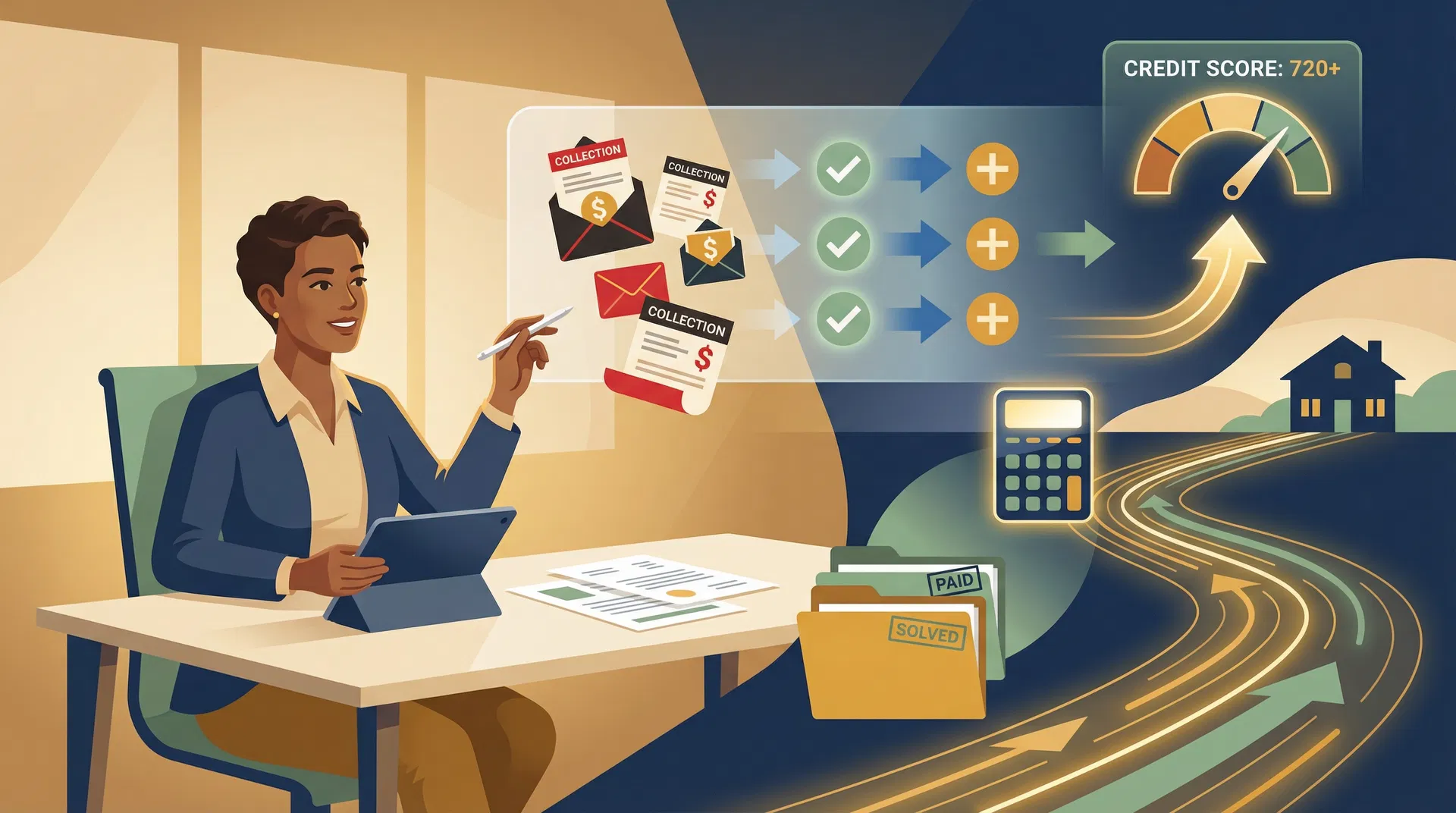
Discovering collection accounts on your credit report can feel overwhelming, especially when you're trying to buy a home in New Jersey's competitive real estate market. However, collection accounts are more common than you might think, and they don't automatically disqualify you from mortgage approval. Understanding how different types of collections impact your application and knowing the right strategies to address them can make all the difference between approval and denial.
Understanding Collection Accounts
A collection account appears on your credit report when an original creditor sells or transfers an unpaid debt to a third-party collection agency. This typically happens after an account becomes 120 to 180 days past due. Once in collections, the debt can significantly impact your credit score and mortgage eligibility, but the severity of that impact varies based on several factors including the type of debt, amount owed, recency, and your overall credit profile.
For New Jersey homebuyers, understanding these nuances is crucial because mortgage underwriters evaluate collection accounts differently depending on the loan program (FHA, VA, USDA, or conventional) and the specific circumstances surrounding each debt. Some collections may require resolution before closing, while others can be explained or even ignored under certain conditions.
Types of Collection Accounts and Their Impact
Not all collection accounts carry equal weight in the eyes of mortgage underwriters. The type of debt, original creditor, and circumstances surrounding the collection all influence how it affects your mortgage application. Understanding these distinctions helps you prioritize which collections to address first and develop an effective strategy for mortgage approval.
Medical Collections
Medical collections often receive the most lenient treatment from mortgage underwriters. Many lenders recognize that medical debt can result from unexpected emergencies rather than financial irresponsibility. FHA guidelines, for example, allow medical collections to be excluded from debt-to-income ratio calculations in many cases. Additionally, recent credit reporting changes mean that paid medical collections are no longer reported on credit reports, and unpaid medical collections under $500 are also excluded.
For New Jersey homebuyers with medical collections, the key is documentation. If you can provide evidence that the debt resulted from a medical emergency or unexpected healthcare expense, underwriters may view it more favorably. Some lenders won't require you to pay off medical collections before closing, especially if they're older or relatively small amounts.
Credit Card Collections
Credit card collections typically have a more significant negative impact on mortgage applications. These debts signal potential financial mismanagement to underwriters, as they represent consumer spending that wasn't repaid. The recency and amount of credit card collections matter considerably—a recent $5,000 credit card collection will raise more red flags than a five-year-old $500 collection.
Most conventional loan programs require borrowers to resolve credit card collections over a certain threshold (often $2,000 to $5,000 in aggregate) before closing. FHA loans may be more flexible, but you'll likely need to either pay the collections in full or establish a payment plan with documented on-time payments for at least three months.
Utility Collections
Utility collections (electric, gas, water, cable, phone) fall into a moderate impact category. While they're generally viewed less harshly than credit card collections, they still raise concerns about your ability to manage recurring financial obligations. In New Jersey, where utility costs can be substantial, underwriters pay attention to utility collections as indicators of payment reliability.
The good news is that utility collections are often smaller amounts and can be resolved relatively easily. Many lenders require utility collections to be paid before closing, but the threshold is typically lower than for other types of debt. If you have utility collections, prioritize paying them off or establishing payment arrangements early in the mortgage process.
Student Loan Collections
Student loan collections present unique challenges because they're often substantial amounts and have specific rules depending on whether they're federal or private loans. Federal student loans in default can be rehabilitated through income-driven repayment plans or consolidation, which can significantly improve your mortgage prospects. Private student loan collections are treated more like other consumer debt.
For FHA loans, you may be able to qualify with student loans in default if you can document a satisfactory payment arrangement with at least three months of on-time payments. Conventional loans typically require student loan collections to be resolved or in a documented payment plan. The key is addressing these collections early and establishing a consistent payment history.
How Collection Accounts Affect Your Mortgage Application
Collection accounts impact your mortgage application in three primary ways: credit score reduction, debt-to-income ratio increases, and underwriter scrutiny. Understanding each of these factors helps you develop a comprehensive strategy for minimizing their negative effects.
Credit Score Impact
A single collection account can drop your credit score by 50 to 100 points or more, depending on your starting score and overall credit profile. The impact is typically most severe when the collection first appears on your report and gradually diminishes over time. Recent collections (within the past two years) have a more significant impact than older ones.
For New Jersey homebuyers, this credit score reduction can affect your mortgage rate, loan program eligibility, and down payment requirements. A score drop from 680 to 620, for example, might move you from conventional loan eligibility to FHA-only options, potentially increasing your costs through mortgage insurance requirements.
Debt-to-Income Ratio Considerations
Underwriters calculate your debt-to-income (DTI) ratio by dividing your monthly debt payments by your gross monthly income. Collection accounts can increase your DTI in two ways: if you're making payments on them, those payments count as monthly obligations; if the lender requires you to establish a payment plan, that payment amount gets factored into your DTI calculation.
Different loan programs have different DTI thresholds. FHA loans allow up to 43% DTI (sometimes higher with compensating factors), while conventional loans typically cap at 45% to 50%. If collection account payments push you over these limits, you may need to pay off the collections entirely or increase your income to qualify.
Underwriter Scrutiny and Documentation Requirements
Beyond numerical impacts, collection accounts trigger additional underwriter scrutiny. You'll likely need to provide detailed explanations for each collection, including what caused the debt, why it went unpaid, and what steps you've taken to resolve it. Underwriters look for patterns—multiple recent collections suggest ongoing financial instability, while a single old collection with an otherwise clean credit history may be viewed as an isolated incident.
Prepare written letters of explanation for each collection account, addressing the circumstances that led to the debt and demonstrating that your current financial situation is stable. Documentation such as medical bills, divorce decrees, or unemployment records can support your explanation and help underwriters understand the context.
Strategies for Resolving Collection Accounts
Successfully navigating collection accounts requires a strategic approach tailored to your specific situation, timeline, and mortgage goals. The three primary resolution strategies—paying in full, establishing payment plans, and disputing inaccuracies—each have distinct advantages and considerations.
Option 1: Pay in Full
Paying collection accounts in full is often the fastest path to mortgage approval, but it requires careful execution to maximize benefits. Before making any payment, negotiate with the collection agency for a "pay for delete" agreement, where they remove the collection from your credit report in exchange for full payment. While not all agencies agree to this, it's worth requesting in writing.
If pay for delete isn't possible, ensure you get a written settlement agreement before making payment. Request that the account be updated to "paid in full" rather than "settled for less than owed" if you're paying the full amount. Keep all documentation, including proof of payment and the settlement letter, as you'll need these for your mortgage application.
Important timing consideration: Paying off collections immediately before applying for a mortgage can sometimes temporarily lower your credit score due to the account being updated. If possible, pay collections at least 30 to 60 days before your mortgage application to allow your credit to stabilize.
Option 2: Establish a Payment Plan
If you can't afford to pay collections in full, establishing a documented payment plan can still allow you to qualify for a mortgage, particularly with FHA loans. The key is consistency—underwriters want to see at least three months (preferably six to twelve months) of on-time payments before approving your mortgage.
When setting up a payment plan, get the agreement in writing and ensure the monthly payment amount fits comfortably within your budget. Remember that this payment will be factored into your debt-to-income ratio, so keep it as low as possible while still demonstrating commitment to resolving the debt.
Document every payment meticulously. Use checks or electronic payments that create a clear paper trail, and keep confirmation receipts. Your mortgage underwriter will request proof of these payments, so organized documentation is essential.
Option 3: Dispute Inaccurate Collections
If a collection account on your credit report is inaccurate, incomplete, or unverifiable, you have the right to dispute it with the credit bureaus. Common grounds for disputes include incorrect amounts, accounts that don't belong to you, duplicate collections, or debts beyond the statute of limitations.
File disputes in writing with all three credit bureaus (Equifax, Experian, and TransUnion) and include supporting documentation. The bureaus have 30 days to investigate and respond. If they can't verify the debt, it must be removed from your report.
Critical warning: Only dispute collections that are genuinely inaccurate. Disputing legitimate debts can backfire if the collection agency provides verification, and it may delay your mortgage application. Additionally, some mortgage programs require you to withdraw disputes before closing, which could result in the collection reappearing on your report.
Loan Program-Specific Collection Guidelines
Different mortgage programs have distinct requirements for handling collection accounts. Understanding these program-specific guidelines helps you choose the right loan type and develop an appropriate resolution strategy.
| Loan Program | Collection Requirements | Medical Collections | Payment Plan Option |
|---|---|---|---|
| FHA | Collections over $2,000 aggregate must be paid or in payment plan | Often excluded from DTI calculations | Yes, 3+ months documented payments |
| VA | No specific threshold; case-by-case review | May be excluded with documentation | Yes, with satisfactory payment history |
| USDA | Collections over $2,000 must be resolved | May be excluded if under $2,000 | Limited; prefer full payment |
| Conventional | Varies by lender; typically $5,000+ aggregate | Treated like other collections | Varies by lender overlay |
Common Mistakes to Avoid
When dealing with collection accounts during the mortgage process, certain mistakes can derail your application or cost you thousands in unnecessary fees. Avoiding these common pitfalls significantly improves your chances of approval.
Mistake #1: Paying Collections Without Getting Written Agreements
Never pay a collection account without first obtaining a written agreement detailing the payment terms, settlement amount, and how the account will be reported to credit bureaus. Verbal agreements are unenforceable, and collection agencies may not honor promises made over the phone. Always communicate in writing and keep copies of all correspondence.
Mistake #2: Ignoring Small Collections
Some homebuyers focus on large collections while ignoring smaller ones, assuming they won't matter. However, even a $200 utility collection can cause underwriting delays or require explanation. Address all collections systematically, starting with those most likely to impact your application.
Mistake #3: Paying Collections Right Before Applying
Paying off collections immediately before your mortgage application can temporarily lower your credit score as the accounts are updated from "unpaid" to "paid." This score drop can affect your interest rate or even your approval. Plan ahead and pay collections at least 30 to 60 days before applying, or work with your loan officer to time payments strategically.
Mistake #4: Settling for Less Without Understanding the Impact
While settling a collection for less than the full amount can save money, it may be reported as "settled for less than owed" rather than "paid in full," which can negatively impact your mortgage application. Some underwriters view settlements less favorably than full payments. Discuss settlement strategies with your mortgage professional before negotiating.
Mistake #5: Not Monitoring Your Credit After Resolution
After paying or settling collections, monitor your credit reports to ensure the accounts are updated correctly. Collection agencies sometimes fail to report payments or update account statuses. If you notice errors, dispute them immediately and provide your payment documentation to the credit bureaus.
Your Action Plan for Mortgage Approval with Collections
Successfully navigating collection accounts requires a systematic approach. Follow this step-by-step action plan to maximize your chances of mortgage approval while minimizing costs and delays.
Step 1: Pull Your Credit Reports (Week 1)
Obtain free credit reports from all three bureaus at AnnualCreditReport.com. Review each report carefully and create a spreadsheet listing every collection account, including the creditor name, amount owed, date of last activity, and collection agency contact information.
Step 2: Verify Collection Accuracy (Week 1-2)
Confirm that each collection is accurate and belongs to you. Check the amounts, dates, and creditor information. If you find inaccuracies, file disputes with the credit bureaus immediately. For accurate collections, move to step three.
Step 3: Consult with a Mortgage Professional (Week 2)
Before paying or negotiating any collections, speak with a knowledgeable mortgage loan officer. They can advise which collections must be resolved for your target loan program, optimal timing for payments, and whether payment plans are acceptable. This consultation can save you thousands and prevent strategic mistakes.
Step 4: Prioritize and Negotiate (Week 2-4)
Based on your loan officer's guidance, prioritize which collections to address first. Contact collection agencies in writing, negotiate pay-for-delete agreements when possible, and get all terms in writing before making any payments. Focus on collections that will have the biggest impact on your mortgage approval.
Step 5: Execute Your Resolution Strategy (Week 4-12)
Pay collections according to your plan, whether that's full payment, settlement, or payment plan establishment. Keep meticulous records of all payments, agreements, and correspondence. If establishing payment plans, make at least three to six months of on-time payments before your mortgage application.
Step 6: Monitor Credit Updates (Ongoing)
After paying or settling collections, monitor your credit reports monthly to ensure accounts are updated correctly. Dispute any errors immediately and provide documentation to credit bureaus. Allow 30 to 60 days for updates to appear on your reports.
Step 7: Prepare Documentation for Underwriting (Before Application)
Compile all collection-related documentation including payment receipts, settlement letters, payment plan agreements, and letters of explanation. Organize these documents in a clear folder to provide to your loan officer when you apply. Thorough documentation speeds up the underwriting process and demonstrates responsibility.
Frequently Asked Questions
Will paying off collections improve my credit score immediately?
Not necessarily. While paying collections is financially responsible, it may not immediately increase your credit score. In fact, paying collections can sometimes cause a temporary score drop as the account is updated. The long-term benefit comes from having fewer negative items on your report and demonstrating financial responsibility to mortgage underwriters.
Can I get a mortgage with unpaid collections?
Yes, depending on the loan program and total collection amounts. FHA loans, for example, allow unpaid collections under $2,000 in aggregate. However, you'll likely need to provide explanations and demonstrate that your current finances are stable. Working with an experienced mortgage professional helps you navigate these requirements.
How long do collections stay on my credit report?
Collection accounts typically remain on your credit report for seven years from the date of first delinquency. However, their impact on your credit score diminishes over time, especially after two years. Paid collections remain on your report for the same period but are viewed more favorably by underwriters than unpaid ones.
Should I pay collections before or after getting pre-approved?
This depends on your specific situation and target loan program. Consult with your mortgage loan officer before paying any collections. They can advise on optimal timing based on your credit profile, loan program requirements, and purchase timeline. In some cases, paying collections after pre-approval but before closing is strategically better.
What if a collection agency won't agree to pay-for-delete?
Many collection agencies refuse pay-for-delete agreements, as they're not required to remove accurate information from your credit report. If pay-for-delete isn't an option, focus on getting the account updated to "paid in full" status and obtaining written confirmation. This still improves your mortgage prospects even if the collection remains on your report.
Take Control of Your Mortgage Journey Today
Collection accounts don't have to prevent you from achieving homeownership in New Jersey. With the right strategy, professional guidance, and systematic approach to resolution, you can navigate collections successfully and secure mortgage approval. The key is taking action early, understanding your options, and working with experienced professionals who specialize in helping credit-challenged borrowers.
Every situation is unique, and the strategies outlined in this guide should be tailored to your specific circumstances, credit profile, and homeownership timeline. Don't let collection accounts discourage you from pursuing your dream of homeownership—instead, use them as an opportunity to demonstrate financial recovery and responsibility.
Ready to Navigate Your Collection Accounts?
Schedule a free consultation to discuss your specific collection situation and create a personalized plan for mortgage approval. I specialize in helping New Jersey homebuyers with credit challenges achieve their homeownership goals.
Disclaimer: This article provides general information about collection accounts and mortgage approval. Individual circumstances vary, and mortgage guidelines change periodically. Always consult with a licensed mortgage professional for personalized advice based on your specific situation. Collection account requirements may differ by lender, loan program, and state regulations.
Related Articles
How to Get a Home Renovation Loan in New Jersey: Complete 2026 Guide
Comprehensive guide to financing your home improvements in New Jersey. Learn about FHA 203(k), HomeStyle, VA renovation loans, and qualification requirements.
Strategic Guide to Timing Your Home Sale
Learn how to balance tax implications, market conditions, seasonal factors, and personal circumstances for optimal home selling timing.
Capital Gains Tax on Home Sales: Complete Guide
Understanding and minimizing capital gains tax when selling your home in New Jersey. Learn about the $250K/$500K exclusion and tax-saving strategies.